
Understanding and Supporting Premenopause, Perimenopause, Menopause, and Postmenopause
If you've ever heard someone say they're "going through menopause," they may actually be talking about several different stages. These terms are often used interchangeably, but they do not mean the same thing. Understanding what happens during each stage can help you recognize changes in your body, know what to expect, and have more informed conversations with your healthcare provider.
Premenopause
Premenopause refers to the years before menopause begins. Although the term is commonly used, it is not an official medical stage of menopause. During this time, your ovaries are functioning normally and your body continues to produce estrogen and progesterone. Menstrual cycles are generally regular, and pregnancy is still possible. Most women in their 20s, 30s, and early 40s are considered premenopausal, although the exact timing varies from person to person.
What you may notice
Most women do not experience menopause related symptoms during premenopause. However, hormone levels naturally rise and fall throughout each menstrual cycle, so symptoms such as breast tenderness, mood changes, or bloating may still occur as part of a normal cycle.
Perimenopause
Perimenopause is the transition leading up to menopause. It begins when the ovaries gradually produce less estrogen. This stage often starts in the mid to late 40s, but some women begin experiencing changes in their late 30s or early 40s. Perimenopause can last anywhere from a few months to more than ten years. During this time, hormone levels fluctuate from month to month. Because of these changes, periods may become irregular and symptoms often appear.
Common symptoms
Irregular menstrual cycles
Hot flashes
Night sweats
Mood changes
Sleep disturbances
Brain fog or difficulty concentrating
Vaginal dryness
Lower sex drive
Weight changes
Joint aches
It is important to know that pregnancy is still possible during perimenopause until menopause has officially occurred.
Menopause
Menopause is officially diagnosed when you have gone 12 consecutive months without a menstrual period and there is no other medical reason for the absence of your cycle. The average age of menopause in the United States is 51 years old, although it commonly occurs between ages 45 and 55. Menopause is not a process that lasts for years. It is a single point in time that marks the end of your reproductive years. Some women continue to experience symptoms during and after menopause because estrogen levels remain lower than they were before.
Postmenopause
Postmenopause begins the day after menopause has been reached and continues for the rest of your life. During this stage, estrogen levels remain consistently lower. Many symptoms such as hot flashes gradually improve over time, while others may continue. Lower estrogen levels can also increase the risk of certain health conditions, making preventive care especially important.
Health considerations during postmenopause
Bone loss and osteoporosis
Heart disease
Changes in cholesterol levels
Vaginal dryness
Urinary tract infections
Pelvic floor changes
Phytoestrogens & Herbal Supports
Phytoestrogens are plant-derived compounds that mimic estrogen in the body. They have an ability to bind to estrogen receptors in the body, potentially exerting estrogen-like effects. Regular consumption of phytoestrogens has led to a reduction in menopausal symptoms, breast cancer, endometrial cancer, and increase in bone mass.
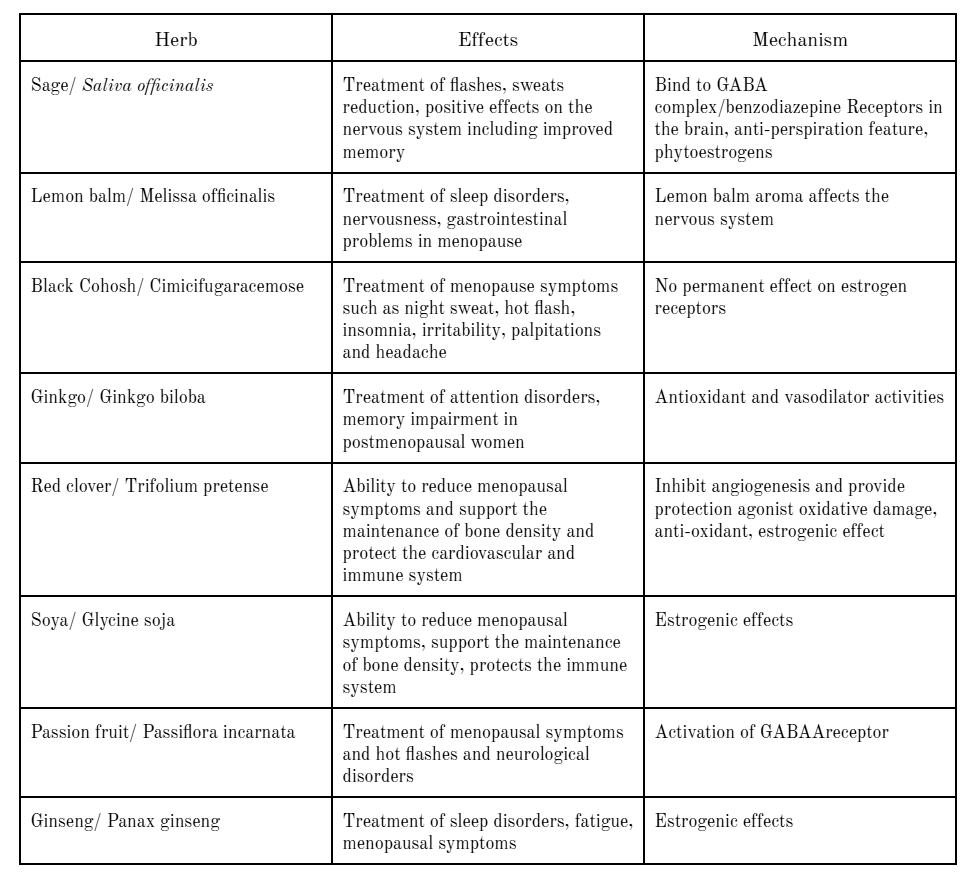
This table lists common and scientific names of herbs, their indicated use for menopausal symptom support, and explains its effects on mechanisms in the body.
Kargozar, R., Azizi, H., & Salari, R. (2017). A review of effective herbal medicines in controlling menopausal symptoms. Electronic physician, 9(11), 5826. https://pmc.ncbi.nlm.nih.gov/articles/PMC5783135/pdf/epj-09-5826.pdf
